
Originally Posted On: https://waterfiremoldtips.com/what-happens-if-hdp-mold-violation-removal-stalls-on-your-brooklyn-ny-property/
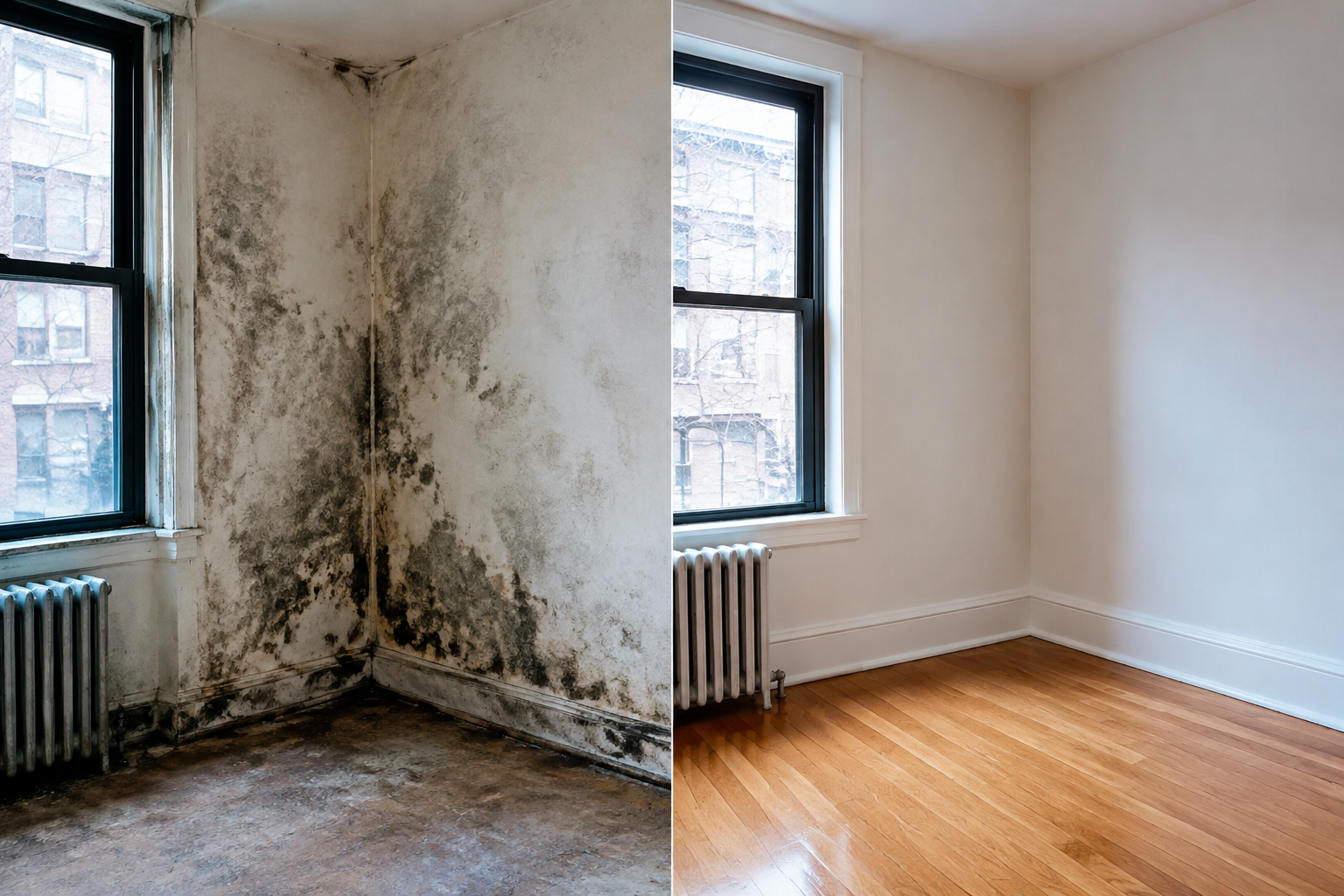
Key Takeaways
-
Treat the correction deadline on your notice as a hard stop. HPD mold violation removal has to be finished and certified before that date, or penalties and reinspection fees start stacking up on your Brooklyn property.
-
Know your violation class. Class A, B, and C each carry different deadlines, and a Class C hazardous mold finding gives you the least time to act.
-
Skip the bleach, vinegar, borax, and fresh paint. Wiping or covering mold doesn’t fix the problem, and a failed reinspection can set you back weeks.
-
Find and repair the water source first, whether it’s a leak, bad flashing, failed caulk, or an aging Brooklyn pipe. Mold comes back if the moisture stays.
-
Hire an IICRC-certified remediation team that will work directly with your insurance company. That cuts delays and keeps your paperwork in order. Coverage still depends on your policy.
-
Already missed the deadline? Call HPD, request a reinspection, get a crew on site now, and keep every photo, invoice, clearance result, and tenant message. Those records protect you in housing court.
The HPD notice has a date on it. Miss that date, and the violation stops being a maintenance problem and becomes a legal one. For Brooklyn landlords, from a Bushwick walk-up to a Flatbush two-family, HPD mold violation removal runs on a clock that doesn’t care about contractor schedules or tenant disputes.
Here’s what most owners learn too late. A violation that sits open keeps costing money. Civil penalties pile up, HPD can send its own crew and bill the property, and a tenant can drag the whole thing into housing court. Frank down in Sunset Park thought a bleach scrub and a coat of paint would close his case. It didn’t. The stains came back, and so did the inspector.
Stalled cleanup usually traces to one of a few causes: the wrong fix, a missed leak, or a locked apartment door. Each one is avoidable, but only if it’s caught before the correction deadline arrives. So what actually happens when removal stalls — how fast can you fix it?
What an HPD Mold Violation Actually Means for a Brooklyn Landlord
A Bushwick owner opens a notice on a Monday. An inspector found black growth behind a bathroom wall in a third-floor apartment — the clock started the day the violation was issued. That’s the reality. It’s a legal deadline, not a cleaning chore.
Fast, documented HPD mold violation removal is what closes the case. Scrubbing a stain with vinegar or borax won’t do it, and neither will painting over it.
Class A, B, and C: Where Mold Violations Land and What the Deadlines Look Like
HPD sorts every violation by risk. Mold most often lands in Class B, though a bad leak with heavy growth can push it higher.
-
Class A (non-hazardous): 90 days to correct.
-
Class B (hazardous): 30 days to correct.
-
Class C (immediately hazardous): 24 hours to correct.
Miss the date and penalties start stacking. Class C is the one that hurts, since HPD can step in and bill the owner for the work.
Local Law 61 and the Rules Behind the Notice
Local Law 61 sits on top of the city’s Housing Maintenance Code. Owners must fix the leak or humidity source, not just the visible patch. Growth over roughly 10 square feet generally calls for a licensed professional and containment, so spores don’t spread to other units.
Mixed-use buildings add a wrinkle.
A ground-floor clinic below apartments, for example, may need medical facility mold remediation handled on a separate track from the residential units above.
Keep the work orders, photos, and clearance paperwork.
HPD wants proof, and tenants’ lawyers will ask for it too.
The Clock Is Running: Penalties and Legal Exposure When Removal Stalls
Missed deadlines cost money. Fast. Once an HPD correction date passes without a certified fix, a Brooklyn owner moves from paperwork problem to active enforcement, and the bill grows every week the black growth stays on the wall.
Daily Civil Penalties, Reinspection Fees, and HPD Repair Charges
Mold is typically a Class B (hazardous) or Class C (immediately hazardous) violation. Civil penalties accrue per violation, and Class C can run steeper and faster. Here’s what stacks up:
-
Civil penalties that keep adding on while the violation stays open
-
Reinspection fees if the inspector finds the work incomplete
-
HPD repair charges when the city sends its own contractor and bills your property, often as a tax lien
Planning the job early matters, so get a real mold removal cost Brooklyn estimate before the deadline, not after. Lingering musty smells from a past leak or fire? Ask about odor removal after fire damage too, since smoke and moisture often travel together.
Housing Court, 7A Proceedings, and Tenant HP Actions in Brooklyn
Tenants don’t have to wait. An HP action in Brooklyn Housing Court lets a renter ask a judge to order repairs, and the court can add civil penalties. Photos of stains, a doctor’s note about breathing trouble, and a copy of the open violation make that case easy.
Then there’s the 7A proceeding. If conditions threaten the building, a judge can appoint an administrator to collect rent and run repairs. Owners lose control of the money. That’s the real exposure.
So what’s the smart move? Fix the source of moisture, document everything, and file the certification before the date passes.
Why Mold Violation Removal Stalls (and How to Spot the Delay Before the Deadline)
Why do so many Brooklyn owners hit the HPD correction date with the job half done? Usually it’s one of three problems, and each one shows up early if someone is watching.
Wrong Fixes: Bleach, Vinegar, Borax, and Painting Over Stains
Bleach, vinegar, and borax can lighten black or sooty stains on a bathroom wall. They don’t remove the spores rooted in drywall. Painting over it is worse. HPD inspectors look for fluffy white or orange growth and for stains that return within days. A fresh coat that bubbles by the next visit means the violation stays open.
Missed Moisture Source: Leaks, Flashing, Caulk, and Old Brooklyn Brick and Pipes
Mold comes back when water does. In Brooklyn brownstones and prewar brick buildings, the usual culprits are failed roof flashing, cracked caulk around a shower, and aging pipes behind the wall. Cleaning without fixing the leak is a wasted week. Proper mold testing after water damage helps confirm where the moisture started before anyone opens a wall.
Access Problems With Tenants and Scheduling Misses
A tenant who works nights, a missed appointment, or a locked apartment can burn days fast. Warning signs include:
-
No signed work date within 5 business days of the notice
-
Contractor quotes still pending at the halfway point
-
Tenant notice letters never documented
Hiring a licensed mold remediation company early lets you keep written access attempts on file. That record matters. HPD can see a good-faith effort, and your HPD mold violation removal timeline stays defensible.
How to Clear an HPD Mold Violation Step by Step
Class C mold violations in NYC carry a 24-hour to 30-day correction window, and a missed date can mean civil penalties that add up daily. Brooklyn landlords with older brownstones and walk-ups in Bed-Stuy or Flatbush see this more than most. Here’s the sequence that works for HPD mold violation removal.
Identify the Mold and the Water Source, Then Document Everything
Find the leak first. Black, sooty, or fuzzy patches on a bathroom ceiling usually trace back to a shower leak, bad flashing, or a leaking pipe. Skip the vinegar and borax. They won’t fix a wet wall.
-
Photograph every stained area with a date stamp.
-
Record moisture readings and the leak’s location.
-
Keep plumber invoices and tenant complaint dates.
Hire a Licensed, IICRC-Certified Remediation Team and Coordinate With Your Insurance Company
Pick a contractor who handles the paperwork, not just the scrubbing. Dual Restoration is IICRC-certified, and the team works directly with your insurance company, so you aren’t the middleman. Coverage depends on your policy. Call your carrier before demolition starts. For landlord mold compliance NYC, the work has to follow HPD’s protocols for containment and safe removal.
Certify the Correction With HPD and Request Reinspection
Once the work is done, confirm the area is clean. A post remediation mold clearance testing report gives you proof that the spore count came back negative. Then:
-
Submit your certification of correction to HPD online.
-
Request a reinspection.
-
Keep copies of every report and receipt.
Don’t wait until the deadline’s last day. Inspector schedules fill up fast.
What to Do If You’ve Already Missed the Correction Deadline
A missed deadline isn’t the end of the road. Most Brooklyn landlords assume HPD has already locked in the worst outcome, but the violation stays open until someone fixes it and gets it re-inspected. Waiting is what makes it expensive, so don’t wait. HPD mold violation removal still works the same way on day 40 as it does on day 4.
Call HPD and Get a Crew on Site
Start with HPD. Request a reinspection, then book a remediation crew the same day. Don’t hold off on one until the other is settled. Many Bronx — Brooklyn owners lose a week arguing over scheduling, and every extra day adds to the penalty exposure. If the source is a leak, water damaged drywall removal has to happen first, because mold returns when the moisture stays.
What Dual Restoration Handles
Dual Restoration covers assessment, mitigation, repair, and direct insurance coordination across all five boroughs. For multi-unit buildings, commercial mold remediation services put one team in charge of the whole job. Coverage depends on your policy, so the crew works with your insurer instead of promising an outcome.
Keep Records of Everything
Paper wins disputes. Keep:
-
Photos of staining, spores, and affected walls, before and after
-
Invoices for every repair and test
-
Clearance results showing a negative follow-up test
-
Tenant communications, including dates of access requests
Hand these over at reinspection. Inspectors close files faster when the proof is already in front of them.
Frequently Asked Questions
How much does mold remediation pay?
If you’re asking about the job itself, pay varies by employer and certification. Most techs start with IICRC training and build from there. If you mean what a landlord pays for remediation, that depends on the size of the affected area and the building. A written assessment is the only reliable way to find out, and we don’t quote numbers in a blog post.
Does turning AC off cause mold?
It can. When you shut off cooling during a humid Brooklyn summer, indoor humidity climbs fast, and mold spores need very little moisture to take hold on drywall, caulk, and window flashing. Keep humidity under about 50 percent and the risk drops. A dehumidifier in a vacant apartment helps a lot.
What counts as mold remediation?
Remediation means containing the affected area, removing mold-damaged materials, cleaning surfaces, drying everything — fixing the moisture source. Wiping black stains with vinegar or borax doesn’t count. For an HPD mold violation removal, the work has to hold up when the inspector comes back, and that means the leak or condensation problem is fixed too.
Can I sue for being exposed to black mold?
Tenants can and do bring claims, usually for breach of the warranty of habitability or for health problems tied to ignored mold. That’s a legal question, so talk to a housing attorney. As a landlord, your best defense is fast, documented remediation after the notice arrives.
How long do I have to correct an HPD mold violation?
The deadline is printed on the notice. Mold is typically a Class B (hazardous) or Class C (immediately hazardous) violation, and the correction window is short. Read the notice the day it arrives. Don’t wait.
What happens if I don’t clear the violation in time?
Penalties accrue, the violation stays on your building’s record, and HPD can bring the case to housing court or send in its own contractor and bill you. Missing the deadline is the expensive mistake. Fixing the mold is the cheaper path.
Can I just clean the mold myself?
For a tiny patch smaller than about 10 square feet, maybe. For anything tied to an HPD violation, no. Inspectors want proof the work was done properly and the cause was fixed, and a DIY bleach scrub rarely gives you that. Hire a certified remediation company and keep the paperwork.
Will my insurance pay for mold removal?
It depends on your policy and what caused the moisture. Coverage often applies when mold follows a sudden, covered event like a burst pipe, and often doesn’t for long-term leaks or neglect. We work directly with your insurance company on the claim, but we can’t promise coverage.
How do I prove the violation is fixed?
Keep the remediation scope, photos before and after, and the contractor’s completion records. Then request an HPD reinspection or certify the correction as the notice allows. Clean paperwork speeds up the whole process.
A stalled HPD mold violation never stays small. Penalties accrue daily, reinspection fees pile up, and a tenant can file an HP action in Brooklyn housing court before a landlord has finished arguing with a contractor. The notice has a deadline, and the city doesn’t pause it for slow scheduling or a leak nobody found.
Most delays trace back to the same three causes. Someone wiped the stain with bleach instead of fixing it. The moisture source behind an old brick wall or a corroded pipe went untouched. Or the tenant couldn’t be reached to grant access. Each one is fixable, but only if the owner acts early and keeps photos, invoices, and clearance results in one place.
Timing matters more than anything else here. Effective HPD mold violation removal means finding the water source, removing the growth under proper containment, and certifying the correction so HPD can reinspect.
Dual Restoration, an IICRC-certified team serving all five boroughs, handles assessment, mitigation, repair, and direct coordination with the property’s insurance company. Coverage depends on the policy, but the paperwork shouldn’t slow the work. Pull out the violation notice today, check the correction date, and call Dual Restoration for an assessment before that date passes.
Dual Restoration
5308 13th Ave Ste 615, Brooklyn, NY 11219
(347) 309-7119
dualrestoration.com
View Google Business Profile
Follow us: Instagram · LinkedIn


