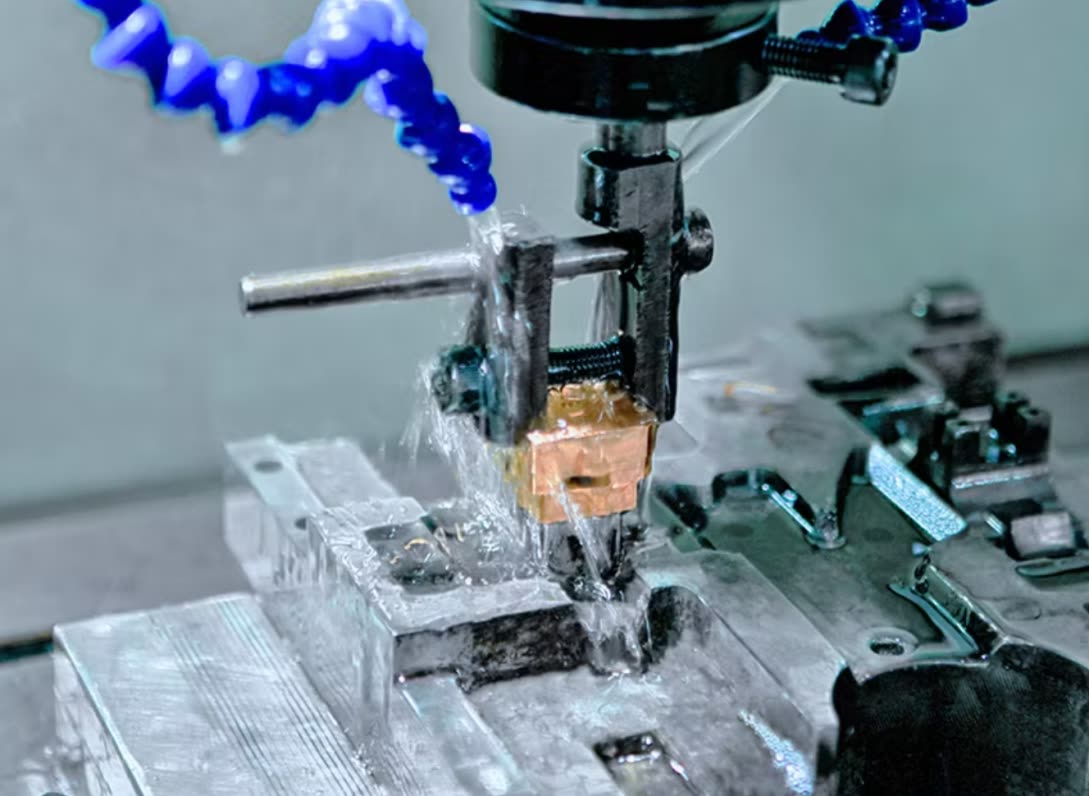
ZHONGSHAN, GUANGDONG, CHINA, November 4, 2026 /EINPresswire.com/ — Inside a high-precision hardware workshop, engineers monitor a multi-axis computer numerical control machining center as it carves hardened steel inserts with sub-millimeter exactness. Outside the facility, a batch of specialized mounting hardware undergoes rigorous field testing, where tight mechanical tolerances directly determine structural stability and operational smoothness. In modern hardware manufacturing, achieving this level of consistency requires much more than generic assembly techniques or third-party sourcing. It relies heavily on tooling architecture built directly into the manufacturing process. As a recognized top 10 custom mold manufacturing company, Kingjoy Group approaches industrial production by treating custom mold creation as the core foundation of product development rather than an auxiliary task outsourced to external vendors.
Many original equipment manufacturers rely on third-party toolmakers for mold design and production. This traditional setup frequently introduces communication friction, mismatched technical specifications, extended lead times, and quality disputes when components fail to assemble cleanly on the factory floor. KINGJOY operates through a different structural paradigm. By integrating toolmaking directly into its primary industrial framework, the company controls the full manufacturing lifecycle. This technical setup bridges the gap between early structural engineering and scalable mass production, allowing complex hardware designs to move seamlessly from raw digital schematics into finished high-performance components.
Rethinking Tooling: The Engine Behind Custom Mechanical Manufacturing
In conventional factory setups, tooling is often treated as an isolated pre-production step. A client submits a draft design, a contract toolmaker builds a mold according to static drawings, and the primary manufacturer receives the completed tooling to begin part molding. When dimensional discrepancies appear during initial production runs, pinpointing accountability becomes difficult and time-consuming. KINGJOY addresses this disconnect by operating a fully equipped, in-house mold manufacturing center that functions as the central engine for custom hardware projects.
Operating under the IATF16949 quality management standard, the internal toolmaking division of Kingjoy Group maintains over 30 specialized processing machines, including 5 high-precision CNC milling units. With an annual production capacity exceeding 600 custom mold sets, the facility bridges structural engineering with physical manufacturing. Bringing toolmaking under direct operational supervision removes the typical boundaries between design verification and physical production. Engineers refine mold geometry alongside part geometry, ensuring that drafts, wall thicknesses, and parting lines are fully optimized long before full production begins.
This unified structure transforms tooling into a continuous development platform. When client specifications require modifications, adjustments occur internally without navigating third-party scheduling constraints or external delay. The resulting workflow speeds up prototype validation and reduces structural vulnerabilities that often emerge when mold fabrication occurs independently from part production.
Comprehensive Mold Coverage: Engineering Solutions from Stamping to Die Casting
Custom hardware applications demand diverse material properties, ranging from lightweight plastic housings to heavy load-bearing metal structures. KINGJOY accommodates these varied requirements through a diverse tooling infrastructure capable of producing multiple mold types under a single operational roof. As a prominent custom mold manufacturing company, the organization aligns its equipment capabilities directly with the functional requirements of each mechanical component.
The company designs and builds deep drawing dies, compound stamping dies, plastic injection molds, die-casting molds, silicone molds, as well as specialized assembly fixtures and inspection gauges. Each mold category addresses distinct mechanical challenges across different production materials:
Deep Drawing Dies: Form complex metal shapes without fracturing material walls, ideal for seamless tubular components and protective housings.
Compound Stamping Dies: Combine multiple cutting and shaping operations into single press cycles, maintaining strict pitch accuracy across high-volume sheet metal parts.
Injection and Die-Casting Molds: Feature balanced runner systems and optimized cooling channels, preventing internal voids, sink marks, or thermal distortion in molded enclosures and structural joints.
Silicone Molds and Precision Fixtures: Enable specialized sealing elements and accurate quality verification directly on the production line.
Within the same manufacturing ecosystem, Kingjoy Group applies these tooling capabilities directly to hardware production. Components such as tripod leg locking mechanisms, selfie stick rotation knobs, and fluid head bases are produced alongside their respective tooling pipelines. Running tool fabrication and part molding on parallel production schedules ensures that mating components fit together smoothly, maintaining consistent mechanical tactile feel and structural integrity across every unit built.
Closed-Loop Customization: Bridging Mold Creation to Mass Production
A major operational bottleneck in hardware manufacturing involves the handoff between independent mold makers and production facilities. When a mold produced offsite encounters dimensional variance or cooling issues, resolving the flaw typically requires shipping the mold back and forth between facilities, stalling production schedules for weeks.
Kingjoy Group resolves this inefficiency through an integrated, closed-loop manufacturing system located within a single industrial campus. The operational loop moves systematically from internal mold fabrication to CNC trial testing, followed by plastic injection or die casting, surface anodizing, and final mechanical assembly. Because every step occurs within the same facility, mold tuning turns into a rapid, streamlined procedure measured in days rather than weeks.
This closed-loop system is backed by over 38 years of foundational tooling experience. Rather than limiting its scope to traditional photography accessories, KINGJOY applies its tooling expertise across multiple sectors, including outdoor equipment hardware and ultra-high-pressure tubular structures. A structural solution developed for a heavy-duty imaging rig can be adapted to reinforce industrial support frames, allowing cross-industry technical insights to improve overall manufacturing reliability. Working as an established mold manufacturing company, the team uses this cross-sector experience to refine cavity layout and tool durability for various high-stress hardware applications.
Tangible Engineering Advantages: Locking Precision Inside the Mold Cavity
In mechanical hardware, performance quality is determined inside the mold cavity. Small dimensional shifts in mold geometry directly affect functional characteristics such as locking torque, rotational friction, concentricity, and structural load distribution.
By managing mold production internally, Kingjoy Group locks strict dimensional tolerances directly into the tooling cavity. When producing tripod locking mechanisms or multi-axis rotational joints, precise cavity dimensions ensure that clamping force remains uniform without causing premature wear on internal contact surfaces. This level of control delivers long-term mechanical reliability:
High Component Interchangeability: Precision cavity machining ensures that parts from the first production run match those from the tenth production run with minimal dimensional variance.
Structural Consistency: Uniform wall thickness and optimized material flow reduce internal stress points, preventing structural fatigue under heavy mechanical loads.
True Component Replication: ODM clients receive parts produced to identical tooling standards rather than loosely matched approximations, ensuring seamless fit during final assembly.
By eliminating external tooling variances, KINGJOY provides hardware brands with consistent mechanical behavior across large-scale manufacturing runs. Operating as a reliable mold manufacturing company, the organization guarantees that each mold cavity serves as an exact blueprint for scalable quality.
Tooling as the Key to Adaptable Manufacturing
For original design manufacturers and brand owners, custom tooling serves as the essential gateway between proprietary product designs and scalable market delivery. Control over mold precision determines how smoothly a product transitions from early engineering concepts into commercial production.
Kingjoy Group combines decades of structural engineering experience with an IATF16949-certified tooling infrastructure to support brands seeking scalable, reliable hardware manufacturing. As a custom mold manufacturing company focused on engineering-led production, KINGJOY offers comprehensive support ranging from early structural feasibility analysis to complete mold fabrication and finished part assembly.
To discuss project specifications, request minimum order quantities for custom tooling, or review sample mold trial reports, engineering teams can submit technical drawings and inquiries directly through the company’s official website at https://www.kingjoygroup.com/
KINGJOY
KINGJOY
Legal Disclaimer:
EIN Presswire provides this news content “as is” without warranty of any kind. We do not accept any responsibility or liability
for the accuracy, content, images, videos, licenses, completeness, legality, or reliability of the information contained in this
article. If you have any complaints or copyright issues related to this article, kindly contact the author above.

Media gallery