
Lincoln, NE – August 31, 2026 – PRESSADVANTAGE –
Wenzl’s Collision Center has published a new consumer guide explaining how collision repair professionals evaluate whether a damaged exterior component may be repaired or requires replacement. The resource organizes the decision around several considerations, including component construction, damage characteristics, repair accessibility, attachment areas, and vehicle-specific manufacturer information.
Developed for vehicle owners reviewing collision repair plans, the guide addresses the misconception that the visible size of a dent or damaged area alone determines whether a component should be repaired or replaced. Instead, the appropriate approach can vary according to the individual component, its documented condition, construction, and technical information applicable to the vehicle.
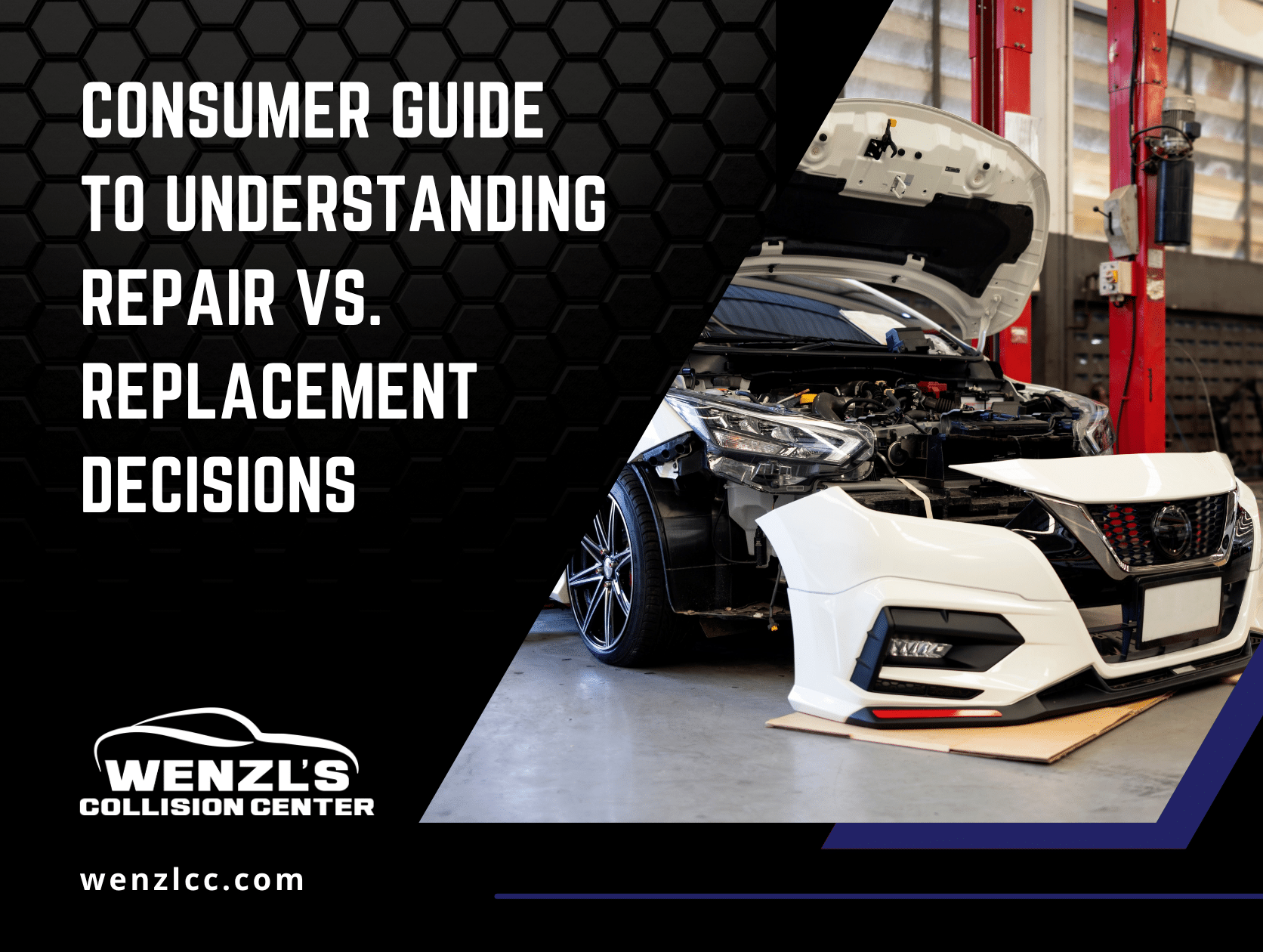
The new publication adds a dedicated repair-versus-replacement framework to Wenzl’s Collision Center’s existing consumer information about auto body repair. It is intended to provide drivers with additional context for understanding repair recommendations without establishing a universal rule for an individual vehicle.
One of the primary considerations covered in the guide is the material used to manufacture the damaged component. Contemporary vehicles can incorporate conventional and high-strength steels, aluminum, plastics, composites, and other materials throughout their exterior and body construction. Because these materials can have different repair characteristics and manufacturer requirements, identifying the affected component and its construction can be an important part of repair planning.
A procedure appropriate for one component should not automatically be assumed appropriate for another because the visible damage appears similar. A damaged steel fender, for example, can present different considerations from damage involving an aluminum panel or plastic bumper component. The guide therefore presents repairability as component-specific rather than treating all dents, creases, cracks, or other exterior damage in the same way.
Damage location is another consideration addressed in the publication. Damage within an accessible portion of a panel can present different repair considerations from damage affecting an edge, body line, mounting location, reinforcement, attachment point, or another area with specific construction characteristics. The size of a dent or deformation can provide useful information, but dimensions alone do not establish whether repair or replacement is appropriate. Material condition, damage shape and location, accessibility, and applicable procedures can collectively influence the decision.
Repair accessibility can also affect the information available during evaluation. Depending on vehicle construction and the location of the impact, trim, lamps, moldings, interior components, or adjacent parts may limit what can be examined during an initial exterior assessment. As repair planning progresses, appropriate removal of an affected or adjacent component may provide access to brackets, fasteners, reinforcements, mounting areas, and other previously covered locations.
Additional access does not mean technicians will necessarily identify more collision damage. Instead, it can provide information about areas that could not initially be evaluated. When collision-related conditions are documented after those areas become accessible, the information can be incorporated into the repair plan.
The new guide also explains the role of vehicle manufacturer repair information. Automakers can publish model-specific technical information addressing construction materials, component repairability, replacement procedures, joining methods, attachment locations, sectioning procedures, corrosion protection, and other considerations. Procedures applicable to one vehicle cannot automatically be transferred to another make, model, model year, or component.
For that reason, Wenzl’s Collision Center presents manufacturer research as part of developing a vehicle-specific repair plan rather than relying on a generalized decision based on exterior appearance. Independent resources such as I-CAR Repairability Technical Support also provide collision repair professionals with technical information for locating and understanding OEM repair procedures and vehicle-specific repairability information. I-CAR is referenced as an independent industry information resource and not as the publisher, sponsor, affiliate, or endorser of Wenzl’s Collision Center’s consumer guide.
The publication further explains how surrounding components can be considered during repair planning. An impact involving an exterior panel may also involve nearby attachment points, trim, lamps, bumper components, brackets, or other parts. Proximity to an impact does not establish that those components require repair or replacement. Their documented condition can instead be evaluated as part of the individual collision.
This provides consumers with context for why collision repair planning can extend beyond the most visibly damaged component without assuming that every nearby part has also been damaged.
Another point addressed in the guide is the distinction between repair and replacement. Wenzl’s Collision Center does not present either approach as inherently preferable. Replacement is not automatically the better option because a new component is installed, while retaining an original component through repair is not automatically the appropriate choice.
The operation selected depends on the individual component, documented damage, material, accessibility, attachment areas, applicable repair procedures, and manufacturer information. A single repair plan can therefore include both approaches when different affected components have different conditions or technical requirements.
The guide also distinguishes an initial visual assessment from the more detailed repair-planning process. An exterior inspection can document visible conditions and identify areas affected by an impact. Appropriate access, component identification, and manufacturer research can provide additional information as planning progresses.
As a result, an initial assessment and a developed repair plan can contain different levels of detail. This does not necessarily indicate that the initial assessment was incorrect. Instead, additional information can become available as affected areas are evaluated and applicable vehicle-specific procedures are identified.
By bringing these considerations together in a single consumer resource, Wenzl’s Collision Center’s new guide provides a structured explanation of how repair-versus-replacement decisions can develop after a collision. The central point is that these decisions are based on the affected component and documented vehicle conditions rather than a universal threshold based on exterior appearance.
Additional information about vehicle evaluation and the broader repair-planning process is available through Wenzl’s Collision Center’s collision repair resource.
About Wenzl’s Collision Center
Wenzl’s Collision Center serves Lincoln, Nebraska, and surrounding communities from its facility at 4515 N 62nd St. The company provides collision repair, auto body repair, paintless dent repair, repair planning, and related vehicle restoration services.
###
For more information about Wenzl’s Collision Center, contact the company here:
Wenzl’s Collision Center
Kelli & Martin Wenzl
(402) 466 0821
kwenzl@wenzlcc.com
4515 N 62nd St, Lincoln, NE 68507


